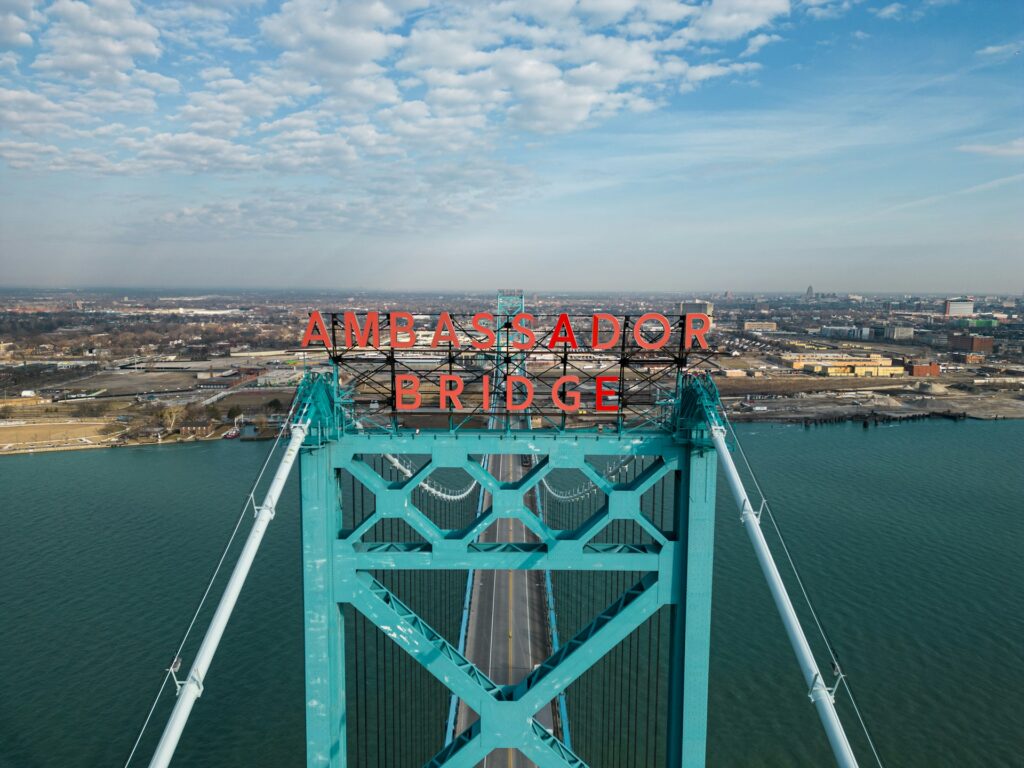
Businesses in Windsor-Essex County often enter commercial relationships that cross the Canada-U.S. border. Ontario companies may buy goods from Michigan suppliers, serve American customers, or participate in transactions involving assets and employees in both countries.
When a contract dispute arises, deciding where to sue can be almost as important as the claim itself. An Ontario business may prefer to proceed close to home, while the American party may argue that the dispute belongs in a United States court. The appropriate forum may depend on the contract, the location of witnesses and assets, the applicable law, and the remedies being sought.
Start With the Contract
The first step is usually to review the dispute resolution provisions in the agreement. A cross-border contract may contain clauses addressing jurisdiction, governing law or arbitration.
A forum selection clause identifies where disputes must be litigated. For example, the agreement may require proceedings to be brought exclusively in Ontario or in a particular American state.
The wording matters. An exclusive jurisdiction clause generally requires the parties to use the named forum. A non-exclusive clause may permit proceedings there without preventing a lawsuit elsewhere.
Governing Law and Jurisdiction Are Different
A governing law clause identifies which jurisdiction’s law applies to the contract. It does not necessarily determine where the lawsuit must be heard. For example, a contract may be governed by Ontario law but require litigation in Michigan. In that case, a Michigan court may be asked to interpret Ontario law.
Applying foreign law can increase cost and complexity. Evidence may be required from a lawyer familiar with the relevant jurisdiction, and disputes may arise over which issues are governed by the contract and which are procedural.
Does the Contract Require Arbitration?
Some cross-border agreements require arbitration rather than court litigation. The arbitration clause may identify the location, procedural rules, governing law and number of arbitrators.
A court proceeding may be challenged or stayed where the dispute falls within a valid arbitration clause. Arbitration can also affect enforcement because international arbitral awards are governed by a different framework from ordinary court judgments. The arbitration provision should therefore be reviewed before either party begins court proceedings.
Can an Ontario Court Hear the Claim?
Where the contract does not settle the issue, an Ontario court may consider whether there is a real and substantial connection between Ontario and the dispute.
Relevant connections may include where the contract was negotiated, accepted or performed, where payment was due, where goods were delivered, and where the alleged loss occurred.
The fact that one party is located in Ontario may not be enough on its own. The connection must relate meaningfully to the claim.
Is Another Court More Appropriate?
Even where an Ontario court has jurisdiction, the other party may argue that a United States court is clearly more appropriate. This is known as a forum non conveniens argument.
The court may compare the convenience and expense of each forum. Factors can include the locations of witnesses, documents, physical evidence, related proceedings and recoverable assets.
The applicable law, available remedies and enforceability of a future judgment may also be considered. No single factor necessarily decides the issue.
When U.S. Proceedings May Be Considered
A lawsuit in the United States may be considered where the contract selects an American forum or the dispute is closely connected to a particular state.
For example, the relevant work may have been performed in Michigan, the witnesses may be located there, and the opposing party’s assets may be held within the state.
U.S. proceedings may also be relevant where immediate relief is required against property or conduct located there. However, court structures, discovery obligations, limitation periods and available remedies can vary between states.
The Location of Assets Matters
Obtaining a judgment does not always result in payment. The successful party must still locate and pursue assets. Before selecting a forum, a business may consider where the opposing party holds bank accounts, equipment, real estate, receivables or other property.
An Ontario judgment against a company whose assets are entirely in Michigan may need to be recognized by a Michigan court before enforcement can begin. A U.S. judgment against an Ontario business may similarly require recognition in Ontario.
Enforcing a Foreign Judgment
A United States judgment is not automatically enforceable in Ontario. The party seeking enforcement generally must show that the foreign court had a sufficient connection to the dispute or the defendant.
Ontario courts do not ordinarily rehear the underlying case. However, enforcement may be opposed on limited grounds involving issues such as fraud, procedural fairness or public policy.
Recognition of an Ontario judgment in the United States depends on the law of the state where enforcement is sought. The requirements and available defences may differ from one state to another. Further, the form of the order can matter. A fixed monetary judgment may be treated differently from an injunction or another non-monetary remedy.
Avoiding Parallel Proceedings
Cross-border disputes sometimes produce lawsuits in both countries. One party may commence an Ontario action while the other files a related proceeding in the United States.
Parallel litigation can increase cost and create the risk of inconsistent decisions. Either party may ask a court to stay or dismiss one of the proceedings based on the contract, jurisdictional principles or the progress of the competing case.
Jurisdictional objections should generally be raised promptly. Participating extensively in a foreign proceeding may affect a party’s ability to challenge that court’s authority later.
Evidence, Discovery and Limitation Periods
The location of evidence can significantly affect the cost of litigation. Documents, witnesses, shipping records and financial information may be spread across both countries.
Ontario and American courts may apply different procedures for document production, examinations, depositions and evidence from third parties. Privacy and confidentiality issues may also arise when business records cross the border.
Limitation periods require immediate attention. Ontario and U.S. deadlines may differ depending on the claim, governing law and state involved. Waiting for the jurisdiction issue to be resolved may create additional risk.
Planning for Future Cross-Border Contracts
A carefully drafted dispute resolution clause can reduce uncertainty. Cross-border agreements may address governing law, exclusive jurisdiction, arbitration, service of documents and enforcement.
Businesses may also consider whether the selected forum is connected to the transaction and whether a judgment from that jurisdiction is likely to be enforceable where the other party has assets. A clause that appears convenient during negotiations may create significant expense if a dispute later arises.
Choosing a Forum Requires a Broader Assessment
The decision to sue in Ontario or the United States involves more than selecting the closest courthouse. Contract terms, jurisdiction, applicable law, evidence, procedural rules, remedies and enforcement may all influence the appropriate forum.
For Windsor-Essex businesses, the volume of commercial activity between Ontario and Michigan makes these questions particularly important. Each dispute must be assessed based on its own contractual terms and cross-border connections.
Willis Business Law: Cross-Border Business Litigation Lawyers Serving Windsor-Essex County
Cross-border contract disputes can raise complex questions about jurisdiction, governing law, forum selection clauses, arbitration and judgment enforcement. Willis Business Law, our business litigation lawyers assist companies with Canada-U.S. commercial disputes involving contracts, counterparties and assets in Ontario and the United States.
We serve businesses in Windsor, Essex County, Tecumseh, LaSalle, Amherstburg, Leamington and surrounding Southwestern Ontario communities. Contact us online or call (519) 945-5470 to discuss a cross-border breach of contract claim, jurisdiction challenge, arbitration issue or foreign judgment enforcement matter.